
WHY MULTIFUNCTIONAL DESIGN IS MORE IMPORTANT THAN EVER
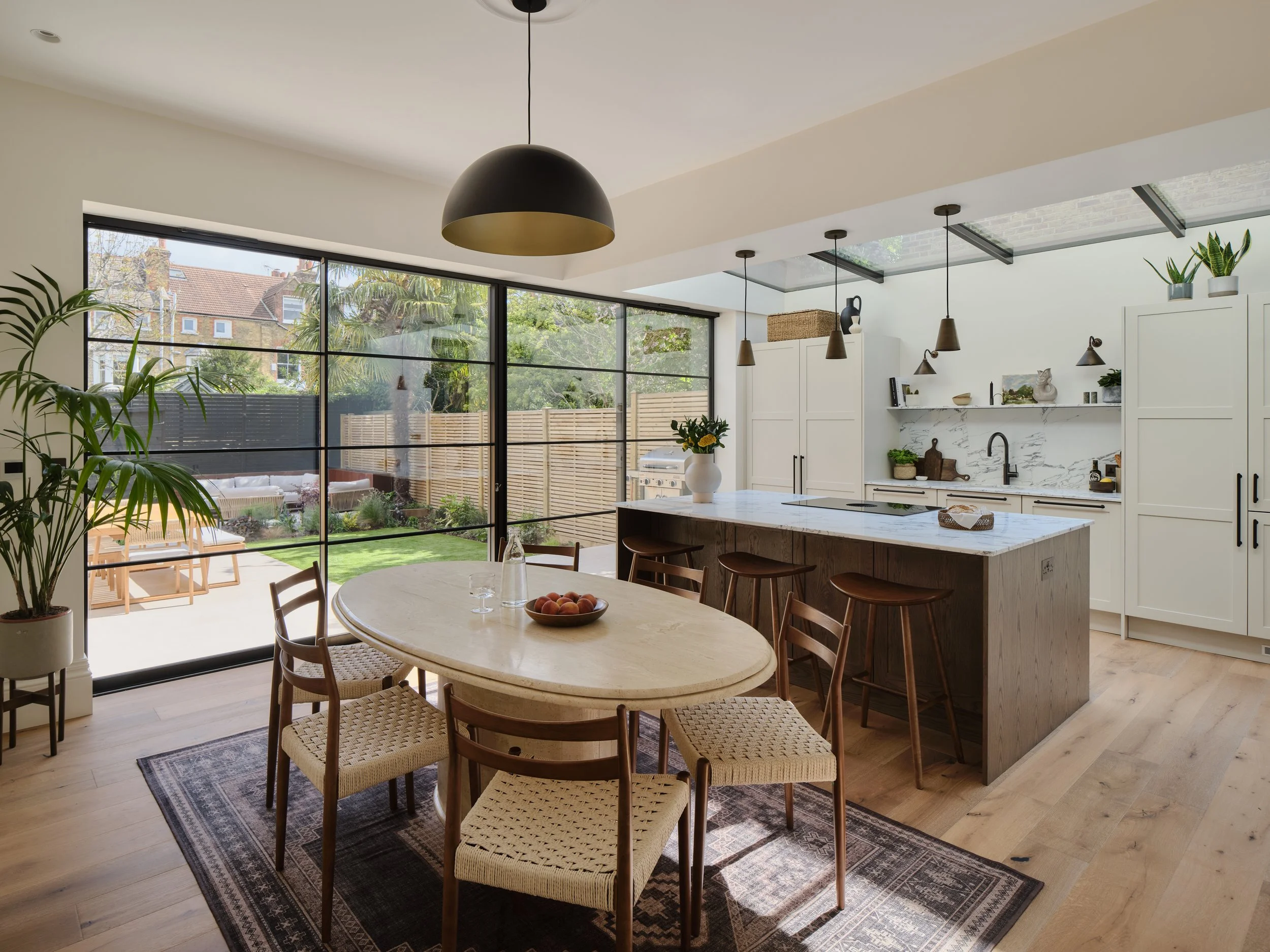
The way we use our homes has evolved over time and, in the last decade, this shift has felt significant. For example, around 40% of people work either entirely from home or between home and the office in the UK now. This is something we wouldn’t have predicted even ten years ago. But home work spaces aren’t the only recent additions to our living spaces – the demands of modern life are multi-dimensional so the way we design has to be too.
When looking for a new home or redesigning a space, it helps to think about how each and every space can be truly optimised – and not just when it comes to smaller spaces. It doesn’t necessarily mean cramming in as much storage as possible or even making use of every inch of space. The process of optimisation is personal to each client – how they live, who they live with, how they want to feel and so on.
The way we design our spaces isn’t just about making it look beautiful. Of course, colours, textures, the overall aesthetic is important, but it’s just part of the puzzle. At PAD, we always try to dig deeper to make sure every space works as hard as possible in the way each client needs it to. What we’re increasingly becoming aware of is that homes need to be multifunctional more than ever and here are a few ways we’re seeing that manifest.
Improve vs move
With the cost of moving higher than ever, many homeowners are looking for ways to improve their current spaces rather than move — and this is where the optimisation discussions begin. It's not just about extending what's already there, but really assessing whether the layout could work harder, or whether the current rooms could become more multifunctional to accommodate evolving lives.
Not just a home
The Covid pandemic was undoubtedly a catalyst for change in how we use our homes. For one thing, there was a rise in remote working, but also a shift to home fitness, hobbies and even education. While many of these things returned to their pre-pandemic state, hybrid working and exercising from home seem to have remained steadfast for many.
For homes that require a workspace, consideration for the work to home transition, privacy, concentration, creativity and motivation are so important. For those incorporating a fitness routine into home life, many of the same considerations are required. And while creating space for all of these things, there’s the added challenge of ensuring boundaries aren’t blurred and work life or fitness routines aren’t impacting rest and relaxation.
Living well
Over time we're starting to understand the benefits of a well designed space on mood and mental wellbeing — lowering stress levels, enabling sharper focus, reducing anxiety, encouraging relaxation and more. The way a space makes you feel has grown in importance and it's something we are looking to more and more. A beautifully designed space is one thing, a room where you want to go and enjoy being is quite another and the latter takes more time and consideration for each individual client.
A family affair
Creating a home that caters to different generations is no longer an anomaly. Rising living and care costs mean families are coming together under one roof more frequently, so creating an environment where multiple generations can live in harmony is more common now. Whether it's communal spaces that accommodate the youngest to the oldest of household members, private rooms to retreat to, or accommodations for mobility issues — understanding who lives where and how a family interacts in the space all needs to be taken into consideration to maintain equilibrium.
Sustainable thinking
With residential buildings accounting for 15% of all CO2 emissions, the impact our homes have on the environment is significant. Inefficient use of energy is a huge problem, so factoring this into every element of design is crucial. From energy efficient appliances to quality insulation, high-efficiency heating and LED lighting – these design elements are ever more important to home dwellers. This shift to more environmentally conscious clients and a need for homes to lower their impact needs to be on every design agenda.
Our belief is that no matter the size of the space – there is always scope for it to be multifunctional. Designing small spaces that have a huge impact is among the most rewarding work we're handed – it really is quite incredible how hard you can make a small room work. The freedom of larger spaces has helped us hone what we do and really understand that every project is rooted in how the client lives rather than filling square footage.
If you’d like to find out more about how to optimise your space, you can get in touch here to speak to one of our experienced designers.